Trametes versicolor (L.) Lloyd
Phylum: Basidiomycota, Order: Polyporales, Family: Polyporaceae
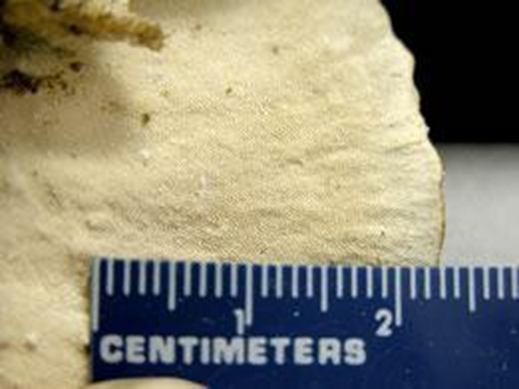
| Macroscopic characters | shape | Sessile; effused-reflexed; dimidiate; often in dense imbricate and fused clusters |
| size | Up to 10-12 cm broad x 6 cim long x up to 5 mm thick | |
| texture | Tough-fibrous | |
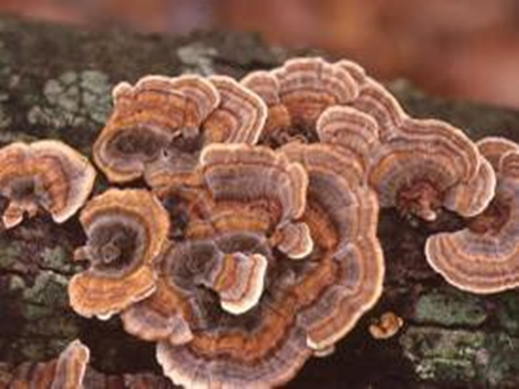
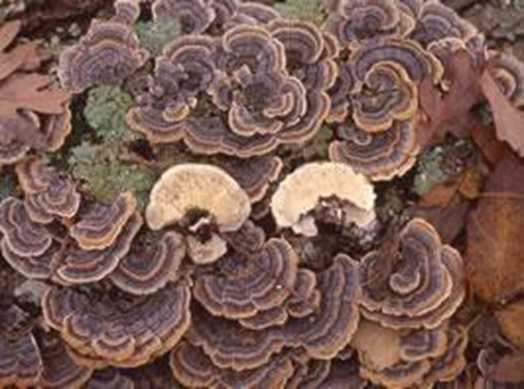
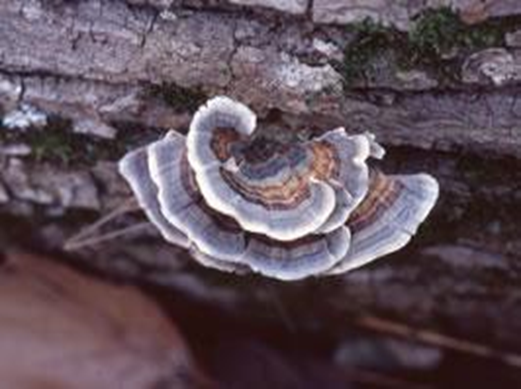
| pileus | Variable in color; strongly zonate with contrasting colors; hirsute to tomentose | |
| stipe | None | |
| context | Cream-colored; tough-fibrous; up to 5 mm thick | |
| pore surface | Cream-colored to cinereous | |
| pores | Angular to circular; 4-5 per mm | |
| tube layer(s) | Concolorous; continuous with context; up to 3 mm thick | |
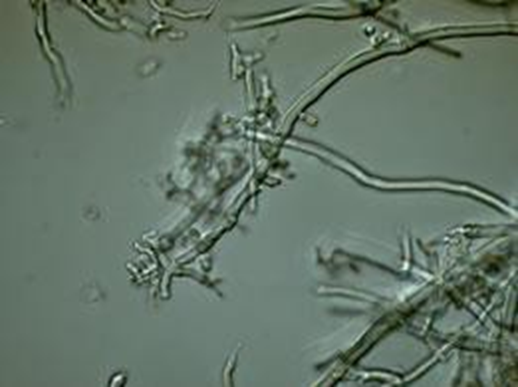
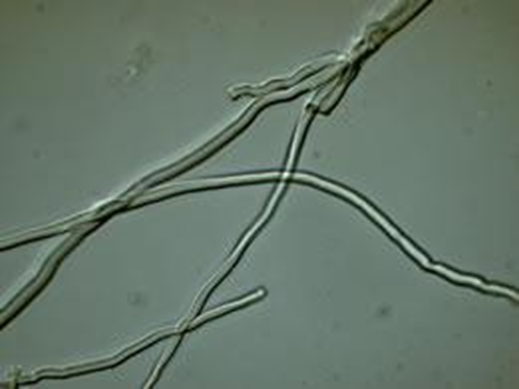
| Microscopic characters | hyphal system | Trimitic; skeletal hyphae thick-walled, aseptate, 4-6 um in diameter; binding hyphae thick-walled, aseptate, profusely branched, 2-4 um in diameter |
| clamp connections | Contextual generative hyphae thin-walled with clamps | |
| sterile elements | None | |
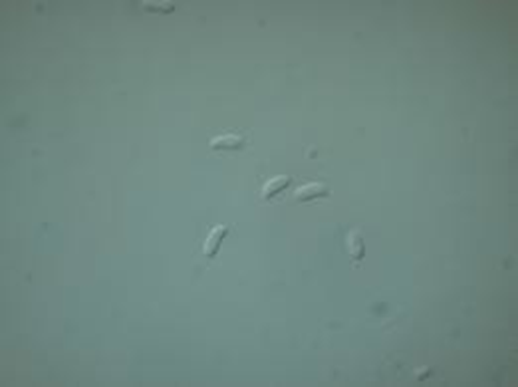
| basidiospores | Cylindric ; slightly curved; hyaline; smooth; 5-6 x 1.5-2 µm | |
| Habitat characters | substrate/host | Dead wood of numerous genera of hardwoods; occasionally on conifers |
| seasonality | Annual | |
| type of decay | White rot of hardwood, rarely conifers | |
| range | Throughout forest regions of North America; circumglobal species | |
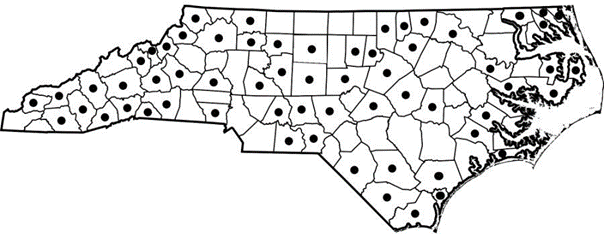
| Notes | Common and widespread in North Carolina and Us referred to as the ‘turkey tail” fungus | |
| References | Gilbertson & Ryvarden, 1887; Grand & Vernia, 2009; Overholts, 1953 | |