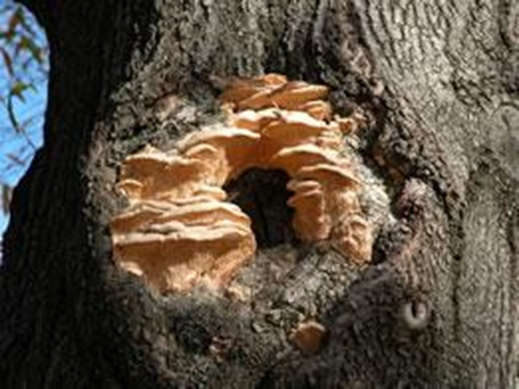
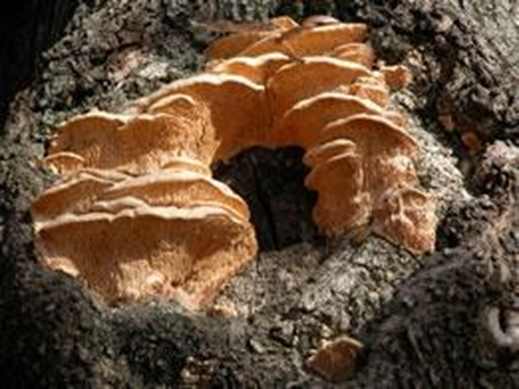
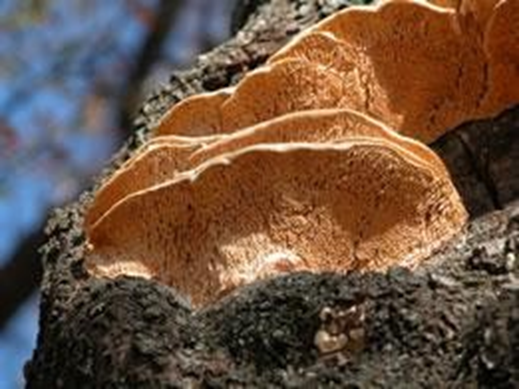
| Macroscopic characters | shape | Dimidiate; ungulate to applanate |
| size | Up to 10 x 18 x 13 cm |
| texture | Finely hispid to tometose or finally glabrous |
| pileus | Cinnamon buff or ochraceous tawny with age |
| stipe | N/A |
| context | Pale buff |
| pore surface | Pale buff to ochraceous |
| pores | Circular to angular; often daedaleoid; 1-2 mm in diameter |
| tube layer(s) | Concolorous and continuous with the context, up to 2 cm thick |
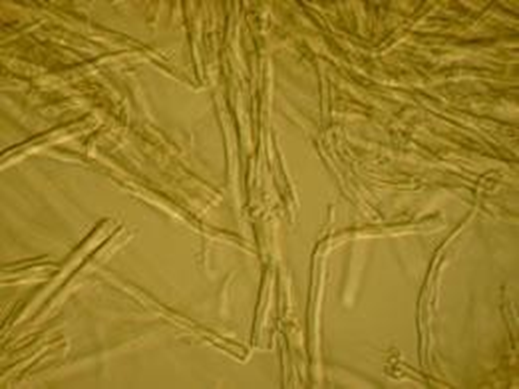
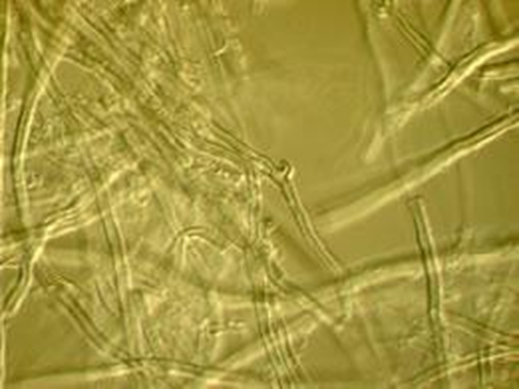
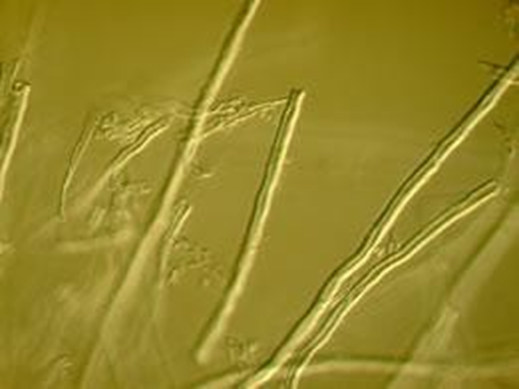
| Microscopic characters | hyphal system | Monomitic |
| clamp connections | On thick walled generative hyphae |
| sterile elements | None |
| basidiospores | Ovoid to ellipsoid; hyaline; smooth; 7-9 x 6-7 um |
| Habitat characters | substrate/host | Commonly on living oaks but occasionally on hosts in other genera |
| seasonality | Annual |
| type of decay | White trunk rot of living hardwoods |
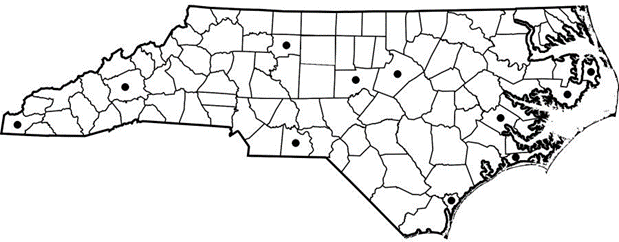
| range | To be expected throughout the range of oaks in North America. Common in Arizona and New Mexico. Known only in North America. |
| Notes | Readily recognized in the field by the thick, pale brownish, sessile basidiocarps with large pores. Microscopically the monomitic hyphal system with thick-walled generative hyphae with abundant clamps and ellipsoid spores are distinctive. |
| References | Overholts, 1953; Gilbertson & Ryvarden, 1986. |