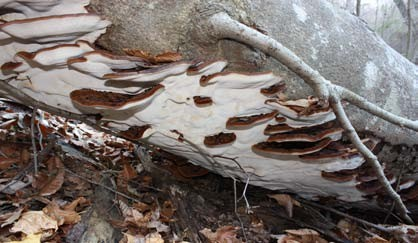
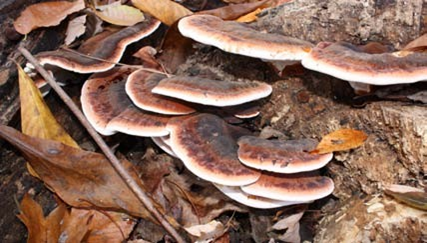
| Macroscopic characters | shape | Dimidiate with tapering base; or broadly attached |
| size | Large; up to 12 cm wide |
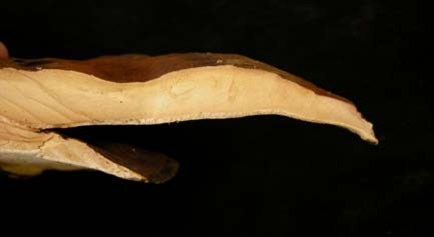
| texture | First fleshy; later hard and brittle |
| pileus | Finely tomentose; dark brown; slightly glossy black resinous crust |
| stipe | N/A |
| context | First whitish; ochraceous and quite hard with age |
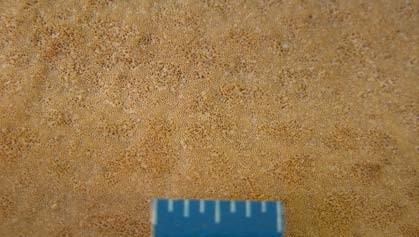
| pore surface | First whitish later pale brown; bruising darker when touched |
| pores | Angular to round; 4-6 per mm |
| tube layer(s) | Up to 10 mm deep |
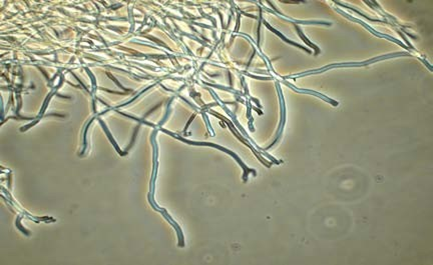
| Microscopic characters | hyphal system | Dimitic |
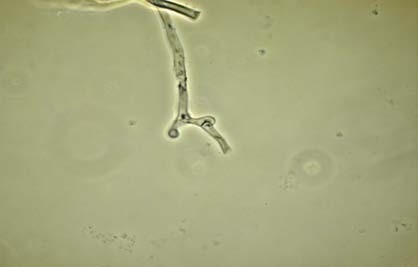
| clamp connections | Present on generative hyphae |
| sterile elements | None |
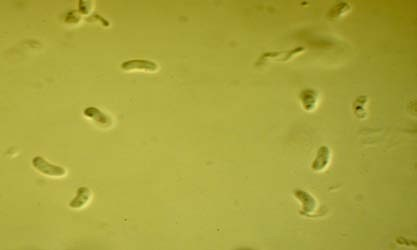
| basidiospores | Cylindrical; hyaline; thin-walled; 5-7 x 1.5 2 um |
| Habitat characters | substrate/host | Dead wood of hardwoods |
| seasonality | Perennial; can be found throughout the year |
| type of decay | White rot of dead conifers and hardwoods; strong anise odor |
| range | Widespread in North America from Florida to Manitoba, and in the west from Arizona to Alaska |
| Notes | Recognized by annual sappy basidiocarp with a dark brown-black pileus; pore surface stains rapidly when touched |
| References | Overholts, 1953; Gilbertson & Ryvarden, 1986. |