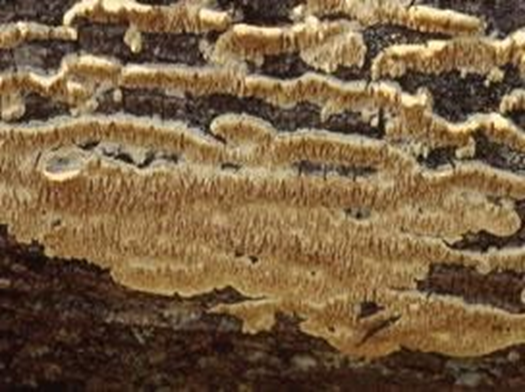
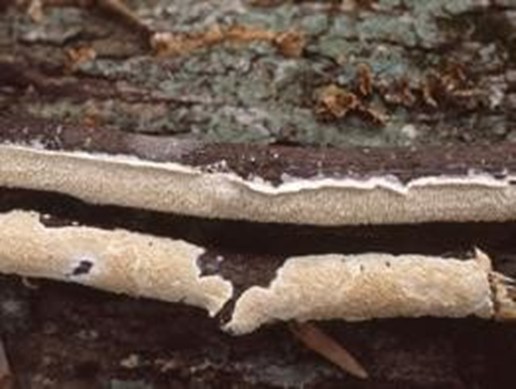
| Macroscopic characters | shape | Effused-reflexed or resupinate at first; pilei usually imbricate; dimidiate or laterally fused |
| size | Up to 1 x 7 x 0.5 cm |
| texture | Densely tomentose to hirsute; smooth or shallowly sulcate in age |
| pileus | White to cream colored or pale buff |
| stipe | N/A |
| context | White to pale tan; soft-fibrous; up to 2 mm thick |
| pore surface | White to cream |
| pores | Angular; 2-3 per mm near margin; dissepiments split to form an irpiciform hymenophore |
| tube layer(s) | Concolorous and continuous with context; up to 3 mm thick |
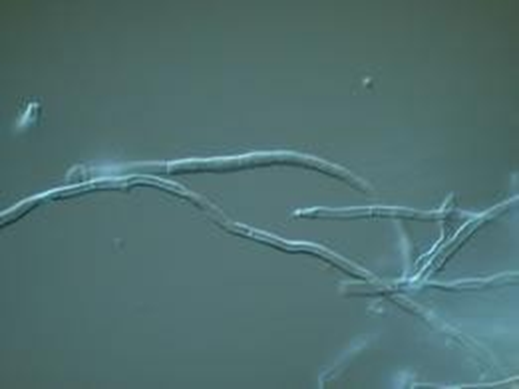
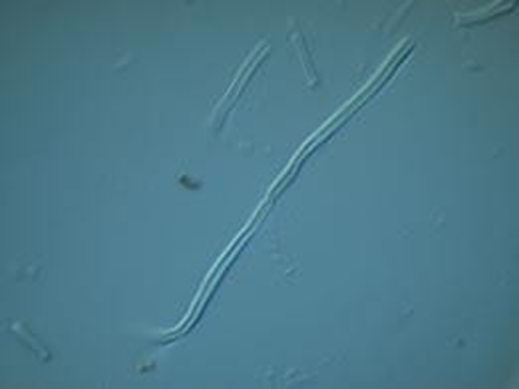
| Microscopic characters | hyphal system | Dimitic; generative and skeletal hyphae |
| clamp connections | None |
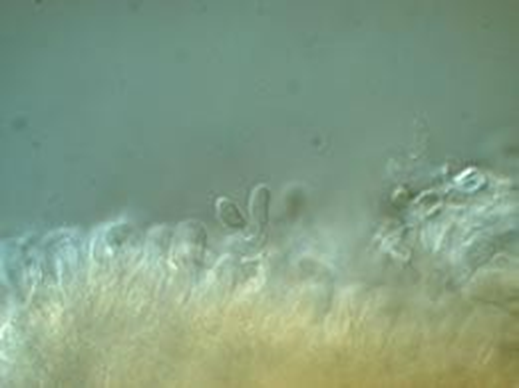
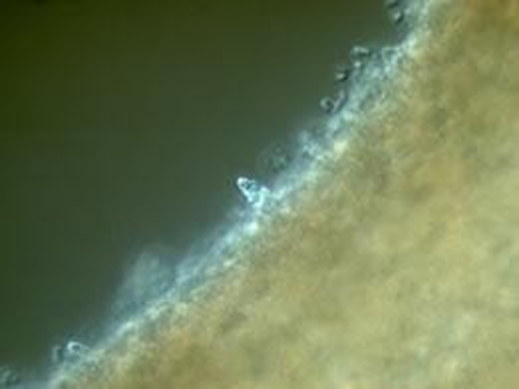
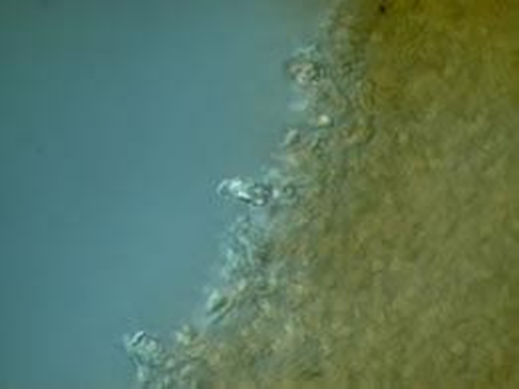
| sterile elements | Cystidia abundant; thick-walled; heavily incrusted apically 50-110 x 5-10 um; projecting up to 40 um |
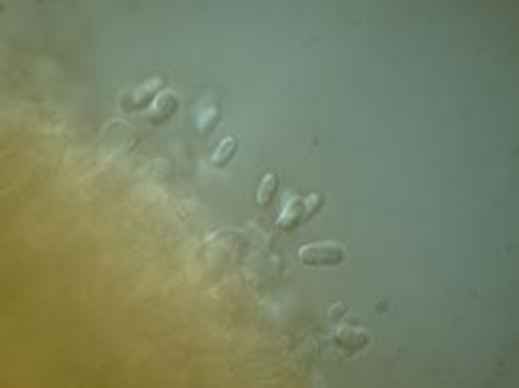
| basidiospores | Oblong to cylindric; straight to slightly curved; hyaline; smooth; 5-7 x 2-3 um |
| Habitat characters | substrate/host | Dead wood of numerous hardwood genera; common on tulip poplar in the southeast U.S. |
| seasonality | Annual |
| type of decay | White rot of dead hardwoods, rarely of conifers |
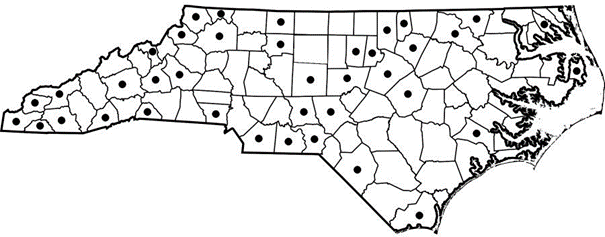
| range | Common throughout the forest regions of Canada and the U.S. except for the Southwest. Cosmopolitan species. |
| Notes | Strongly hydnaceous hymenophore, conspicuously incrusted cystidia, and simple-septate hyphae are diagnostic . |
| References | Overholts, 1953; Gilbertson & Ryvarden, 1986. |