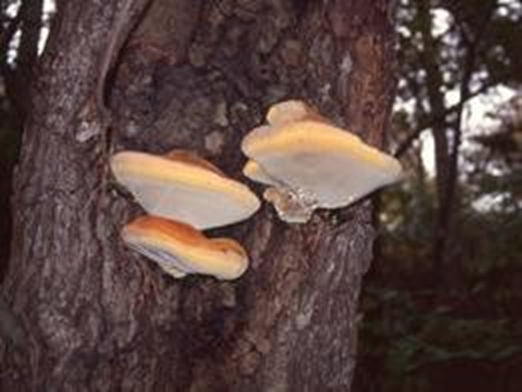
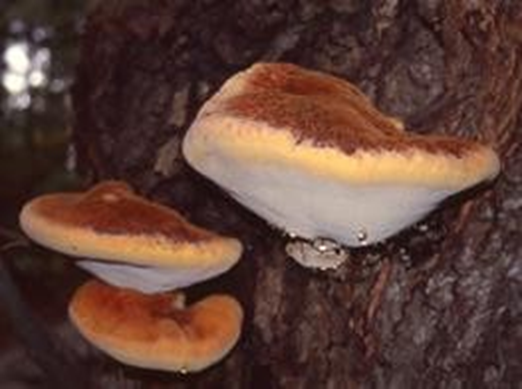
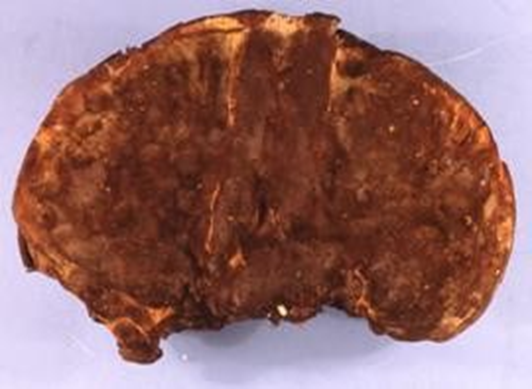
| Macroscopic characters | shape | Applanate, dimidiate ; sessile |
| size | Up to 10 x 16 x 8 cm |
| texture | Coarsely hispid or rarely strigose |
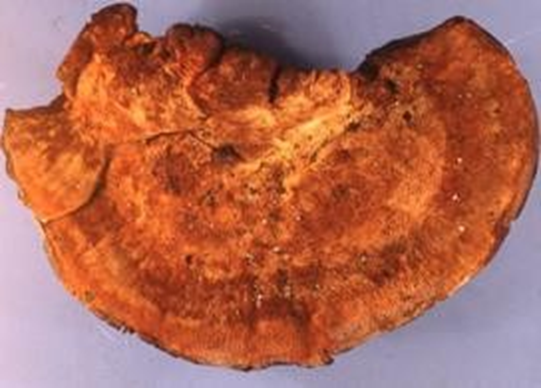
| pileus | Bright reddish-orange; becoming dark reddish-brown to blackish |
| stipe | Sessile |
| context | Dark reddish-brown; soft-fibrous; azonate; up to 4 cm thick |
| pore surface | Yellowish-brown; becoming blackish |
| pores | Angular; 1-3 per mm |
| tube layer(s) | Yellowish-brown; later concolorous with the context; up to 1.5 cm thick |
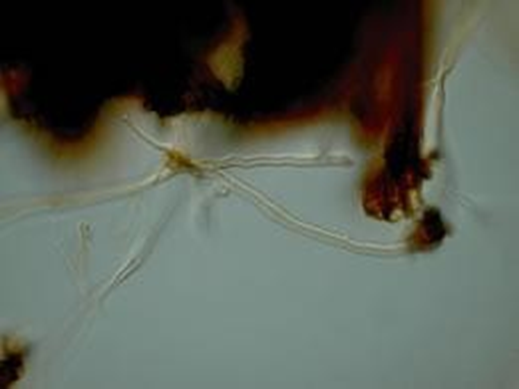
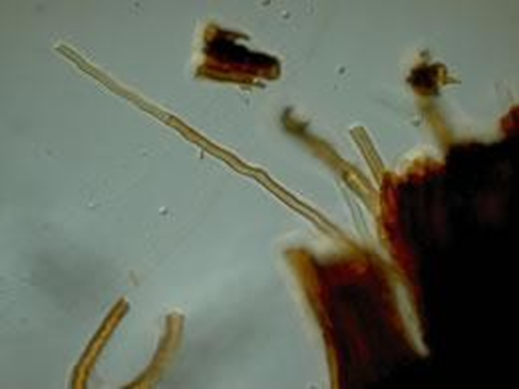
| Microscopic characters | hyphal system | Monomitic; some hyphae thick walled and yellow to brown |
| clamp connections | N/A |
| sterile elements | Rare to abundant, apparently lacking in southwestern specimens |
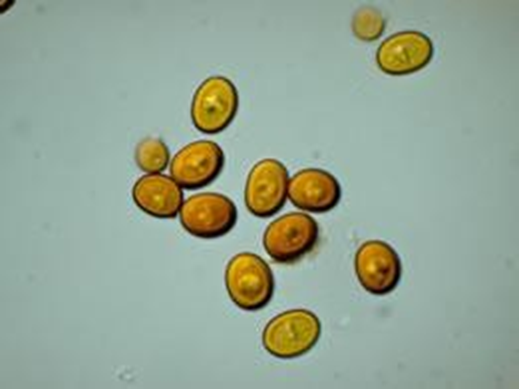
| basidiospores | Subglobose to ovoid; smooth; becoming thick-walled; brown; 8-11 x 6-8 um |
| Habitat characters | substrate/host | Living hardwoods, especially oaks |
| seasonality | Annual |
| type of decay | White rot of the heartwood in trunks of living hardwoods, particularly oaks. Capable of killing sapwood in living trees and is commonly associated with trunk cankers on oaks. |
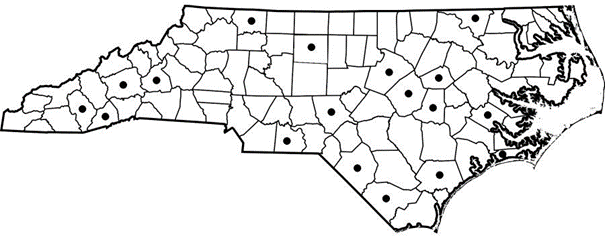
| range | Eastern and southwestern U.S. and Pacific Coast |
| Notes | Stongly hispid upper surface, large, pigmented spores, and the extreme variation in occurrence of setae are distinctive characters. |
| References | Overholts, 1953; Gilbertson & Ryvarden, 1986. Grand & Vernia 2005A. |