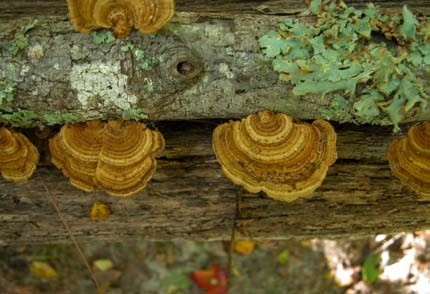
| Macroscopic characters | shape | Dimidiate |
| size | Up to 12 cm wide |
| texture | Corky to leathery |
| pileus | Buff to light brown; usually zonate and shallowly sulcate; matted- strigose to glabrous |
| stipe | N/A |
| context | Pale buff to brown; corky |
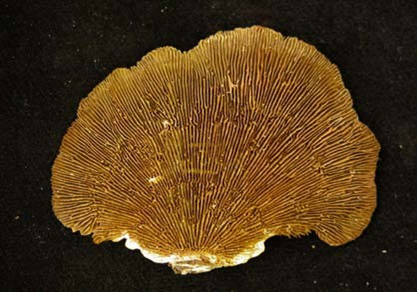
| pore surface | Light buff; becoming brown in age |
| pores | Variable; circular or radially elongated; up to 1 mm in diameter; daedaleoid |
| tube layer(s) | Concolorus and continuous with context; up to 10 mm thick |
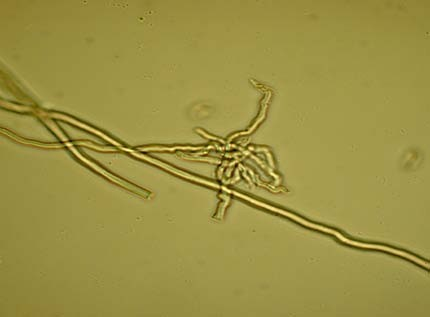
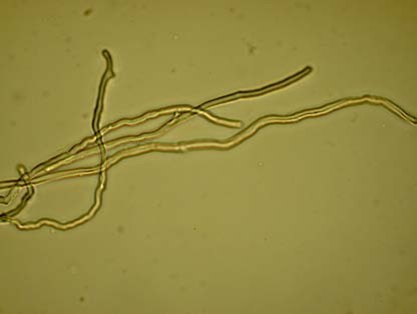
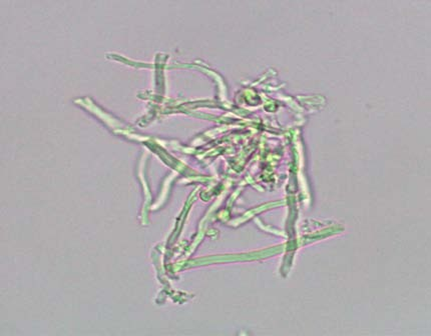
| Microscopic characters | hyphal system | Trimitic |
| clamp connections | Generative hyphae with clamps |
| sterile elements | Branching dendrohyphidia present; 2-3 um in diameter |
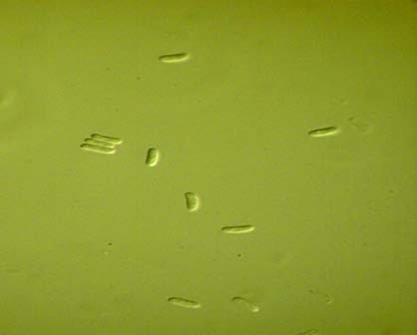
| basidiospores | Cylindric; slightly curved; hyaline; smooth; 9-11 x 2-2.5 um |
| Habitat characters | substrate/host | On dead wood of many hardwood genera |
| seasonality | Annual |
| type of decay | White rot of dead hardwoods and conifers |
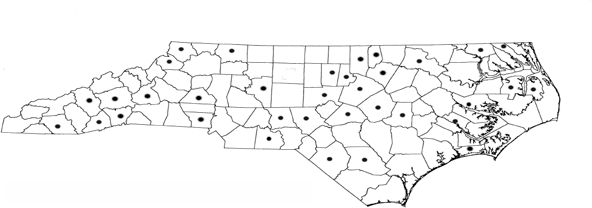
| range | Common throughout eastern and southern hardwood forests; infrequent in western North America but known from the Northwest and Southwest |
| Notes | One of the most variable of the polypores |
| References | Overholts, 1953 Gilbertson & Ryvarden, 1986. Grand & Vernia, 2002 |