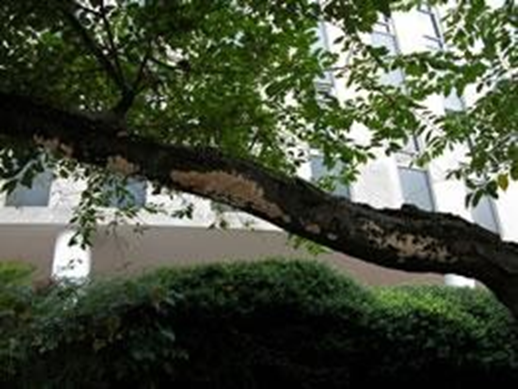
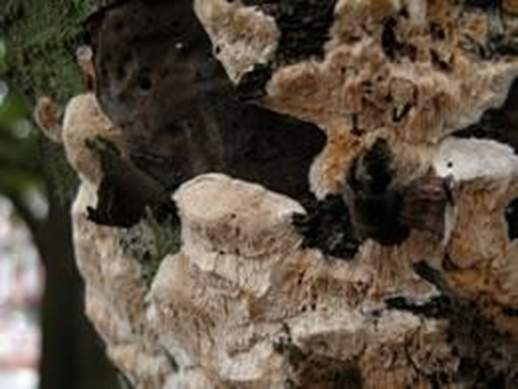
| Macroscopic characters | shape | Resupinate |
| size | Variable; often large; 1-5 mm thick |
| texture | Tough |
| pileus | None |
| stipe | None |
| context | Little to none |
| pore surface | Cream-colored becoming darker with age (grey brown) |
| pores | Irregularly various sizes and shapes; poroid to lacerate |
| tube layer(s) | Shallow; net-like; varying sizes; often irregular; somewhat labyrinthine |
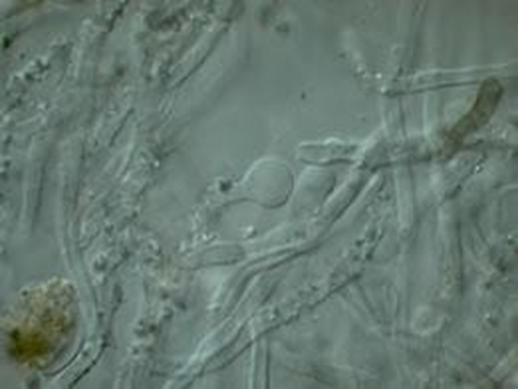
| Microscopic characters | hyphal system | Dimitic; skeletal hyphae often rare |
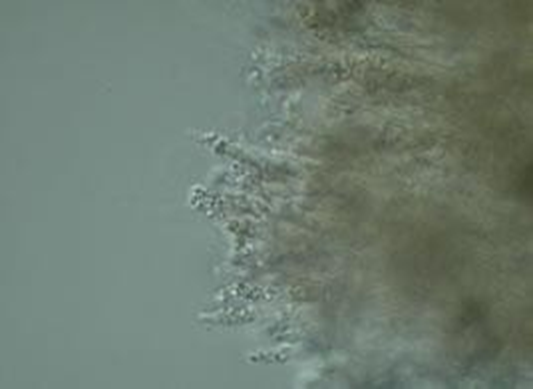
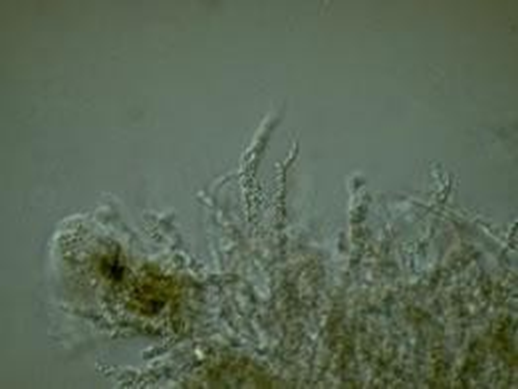
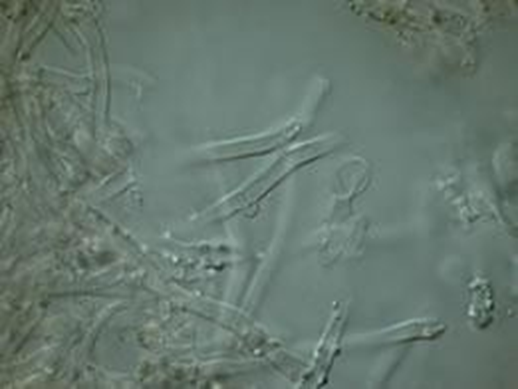
| clamp connections | Generative hyphae with clamps at all septa; hyphal tips often encrusted |
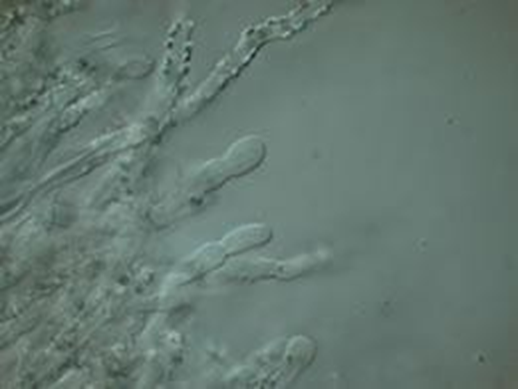
| sterile elements | Cystidioles present in variable numbers; usually capitate with rounded cap of resinoid substance |
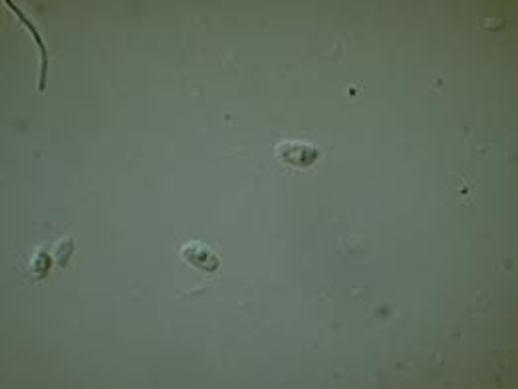
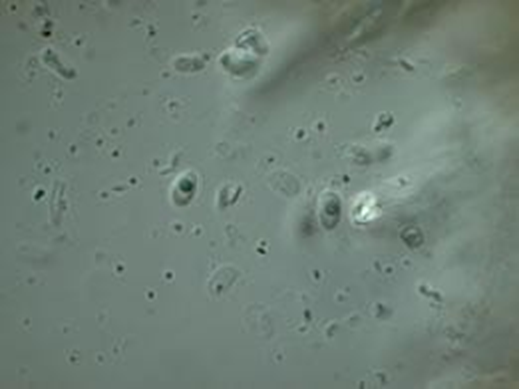
| basidiospores | Ellipsoid; smooth; 5-6 (-6.5) x 3.5-4 µm |
| Habitat characters | substrate/host | Decayed deciduous wood in all kinds of forests |
| seasonality | Annual ? |
| type of decay | Causes a crumbly white rot |
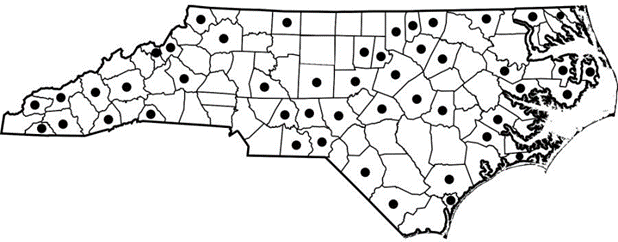
| range | Widely distributed in North America; common and cosmopolitan species |
| Notes | Captiate cystidioles especially near the pore edges are distinctive. |
| References | Gilbertson & Ryvarden, 1987; Grand & Vernia, 2004A |