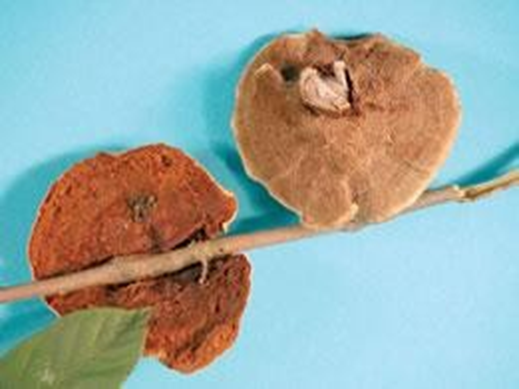
| Macroscopic characters | shape | Solitary; broadly attached; semicircular to round in outline |
| size | 1-5 cm in diameter; up to 2 cm thick |
| texture | Soft and spongy |
| pileus | Velvety to strigose; covered with a spongy-cottony tomentum; yellowish-brown to rusty- brown |
| stipe | None |
| context | Duplex; dense lower portion, almost like a dark zone above tubes; upper portion loose spongy; dark cinnamon to rusty brown |
| pore surface | Cinnamon to rusty brown |
| pores | Angular; thin-walled; 2-4 per mm |
| tube layer(s) | Up to 2mm deep |
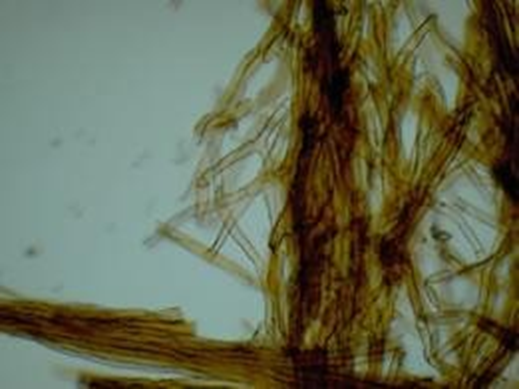
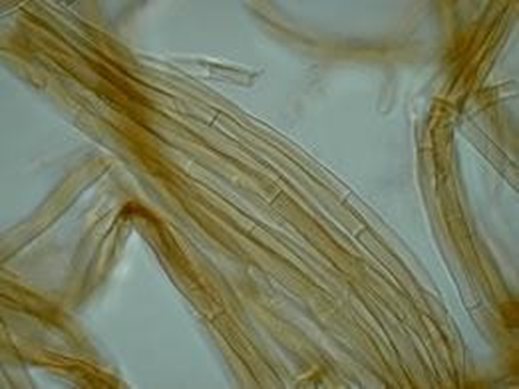
| Microscopic characters | hyphal system | Monomitic; gemerative hyphae in upper portion of context hyaline to rusty brown, thin-walled; hyaline to rusty brown hyphae in lower portion |
| clamp connections | None |
| sterile elements | None |
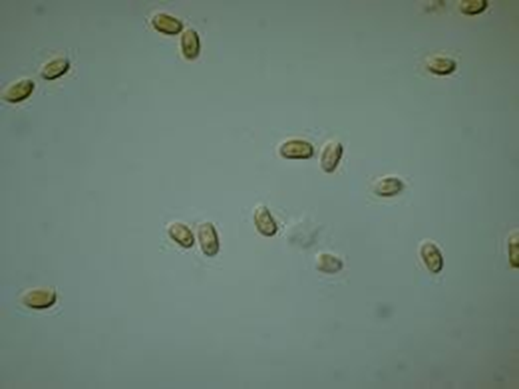
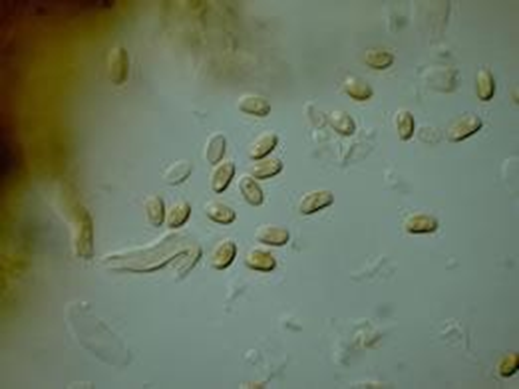
| basidiospores | Narrowly ellipsoid; pale yellowish-brown; 3.5 x2.5-3 µm |
| Habitat characters | substrate/host | On living trees and bushes of Asimina and Citrus |
| seasonality | Annual |
| type of decay | Causes a white rot |
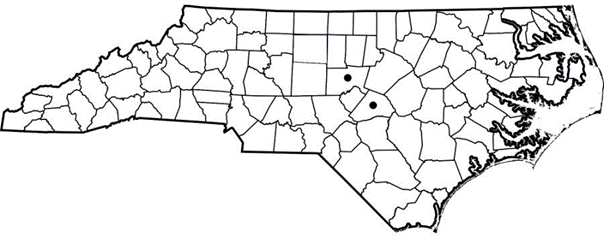
| range | Georgia , Florida and North Carolina; widespread in the topical zone |
| Notes | Occurs chiefly on very small diameter branches. Collected once in North Carolina (Chatham Co.) on Asimina. |
| References | Gilbertson & Ryvarden, 1987; Grand , Vernia and Perry, 2003; Overholts, 1953 |